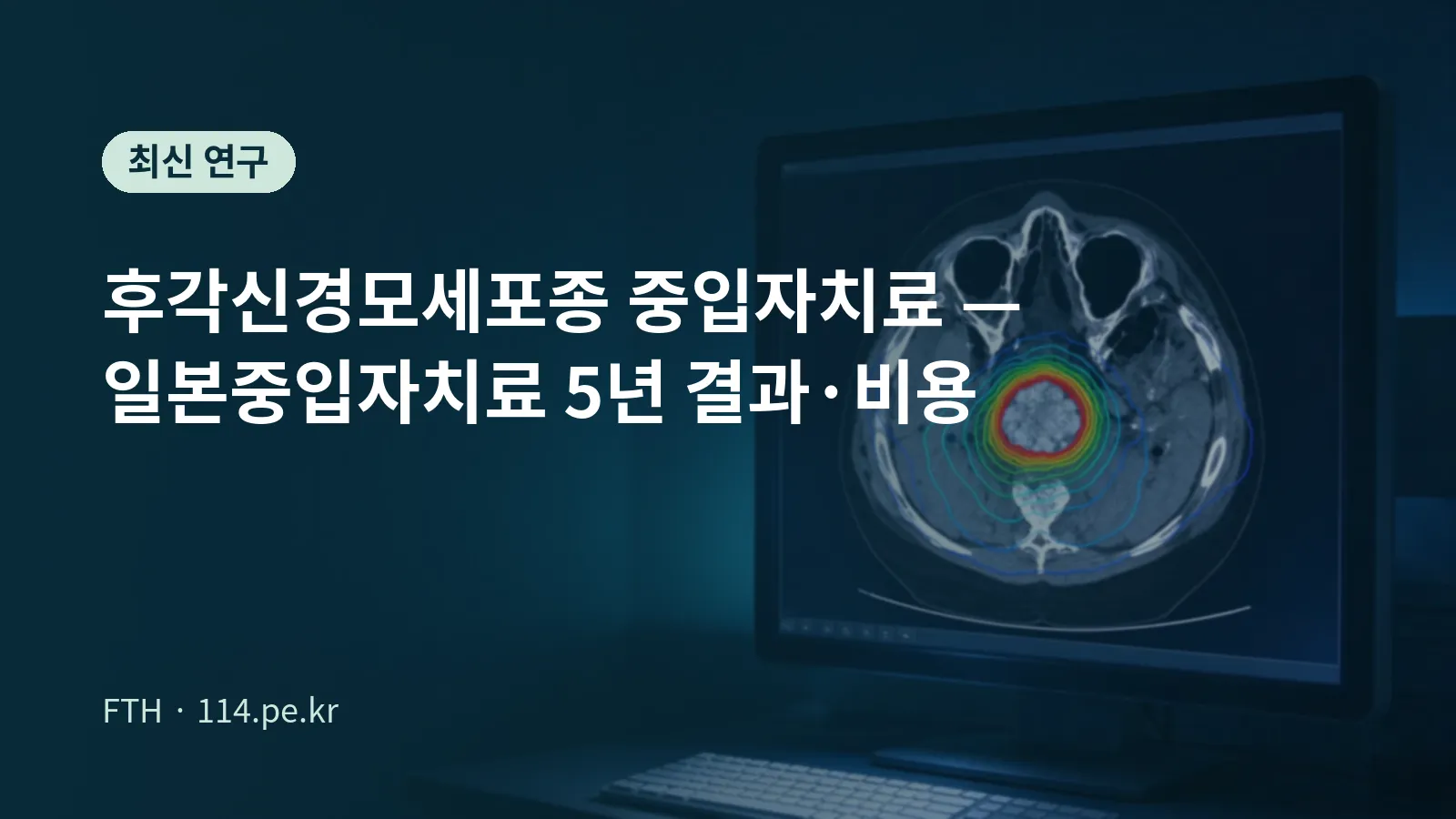
Carbon ion therapy for olfactory neuroblastoma uses carbon ion beams to treat a rare cancer that starts high in the nasal cavity, near the nerves of smell. In November 2025, QST Hospital in Chiba, a leading center of carbon ion therapy in Japan, reported 22 patients with inoperable, locally advanced disease followed for a median of more than five years. The 5-year overall survival was 78.3% and 5-year local control was 70.8%. A multicenter study of 21 patients at four Japanese centers reported a 3-year overall survival of 88.4%. Both studies describe real patients treated in clinical practice, and in Japan the head and neck malignancies that include this cancer have been covered by public insurance since April 2018. To find out whether treatment is possible with your images and pathology, and what it would cost, contact us for an eligibility and cost consultation.
What is olfactory neuroblastoma?
Olfactory neuroblastoma (also called esthesioneuroblastoma) is a malignant tumor that arises from the olfactory epithelium in the roof of the nasal cavity. It is rare even among nasal and sinus cancers, so finding a hospital with deep experience can be hard. Early symptoms are often common ones, such as a blocked nose on one side or nosebleeds. As the tumor grows, patients may lose their sense of smell, have a bulging eye or see double.
The extent of disease is usually described with the Kadish stage. Roughly, A means the tumor is inside the nasal cavity, B means it has spread to the sinuses, and C means it extends into the orbit, the skull base or toward the brain. Spread to neck lymph nodes or distant organs is sometimes classed as D. In the QST study, 16 of 22 patients (over 70%) were stage C, which makes the good results especially meaningful.
Why carbon ion therapy when surgery is difficult
Standard treatment is surgical removal followed by radiotherapy. When the tumor touches the optic nerve, brain or skull base, however, complete removal can be difficult, and aggressive surgery may change facial appearance or affect vision. Some patients are also older or not fit for major surgery.
Carbon ions release most of their energy at a set depth and almost stop beyond it, a property called the Bragg peak. This lets doctors concentrate a high dose in the tumor while reducing dose to the nearby brainstem and the opposite eye. Carbon ions also damage cancer cells more strongly than X-rays, which helps with tumors that respond poorly to conventional radiation. See What Is Carbon Ion Therapy? for the basics.
| Item | Surgery-based treatment | Carbon ion therapy |
|---|---|---|
| Main candidates | Tumors that can be fully removed | Surgery is difficult or not desired |
| Method | Endoscopic or open skull surgery, then radiation | No incision; 16 sessions, once a day |
| Duration | Hospital stay and recovery, then weeks of radiation | About 4 weeks of irradiation (plus preparation) |
| Face and function | Depends on the extent of surgery | No incision, facial appearance preserved |
| Points to check | Surgical complications | Vision on the side where the tumor touches the optic nerve |
Which approach is better depends on tumor location, extent and general health. In the QST study, 7 of the 22 patients could have had surgery but chose carbon ion therapy because of older age or a tumor too close to critical organs.
QST 5-year results and Japanese multicenter results
Two Japanese studies are the main data. The first, a QST Hospital study published in Anticancer Research in November 2025, followed 22 patients treated from 2002 to 2022 for a median of 63.2 months. The second is an analysis by the Japan Carbon-Ion Radiation Oncology Study Group (J-CROS) across four centers, published in the same journal in 2018.
| Study | Patients | Treatment | Main results |
|---|---|---|---|
| QST Hospital, Ikawa et al. (2025) | 22 inoperable, locally advanced (16 stage C) | 16 sessions over 4 weeks, 60.8 Gy (RBE) | 5-year OS 78.3%, 5-year local control 70.8%, 5-year PFS 42.0% |
| QST, 16 stage C patients | Spread to the orbit or skull base | Same | 5-year OS 84.6%, local control 70% |
| Four Japanese centers, Suefuji et al. (2018) | 21 locally advanced T4 | Carbon ion therapy at four centers | 3-year OS 88.4%, 3-year local control 83.0% |
The authors concluded that carbon ion therapy is an effective option for inoperable locally advanced olfactory neuroblastoma. For comparison, the paper cites 5-year survival of 65% to 77% for operable patients treated with surgery, chemotherapy and radiation. Reaching 78.3% in patients who could not have surgery is an encouraging result.
Follow-up findings were also reported. Six of the 22 patients had a recurrence at the treated site and eight developed new neck lymph node lesions, so Japanese hospitals continue regular MRI checks, including the neck, after treatment. Lesions found early can be treated with surgery or further therapy. The 7 patients who received chemotherapy first had longer progression-free survival, so doctors also consider the order of drug treatment.
Results for other nasal and skull base tumors are in Head and neck cancer carbon ion therapy and Head and neck cancer — indications and 16-session schedule.
How are the eyes and brain protected?
Because this tumor lies close to the optic nerves, the eyes are the main focus of treatment planning. QST planned the maximum dose to the optic nerves and optic chiasm at 40 Gy (RBE) or less to protect vision while giving a high dose to the tumor.
When the tumor directly surrounds one optic nerve, that area must be treated fully to prevent recurrence. Three patients were in this situation, and all three already had reduced vision or visual field on that side before treatment. After explanation, the tumor was prioritized and these three lost vision in the treated eye. Vision in the opposite eye was preserved in every patient.
Late side effects of grade 3 or higher occurred in 6 of 22 patients: five involved the optic nerve and one involved brain tissue changes. There were no treatment-related deaths. Inflammation of the nasal lining and skin is common during treatment and usually resolves afterward. At consultation, ask about the distance between the tumor and the optic nerve and the expected change in vision. See Carbon ion therapy side effects.
Schedule and cost of carbon ion therapy
In the QST study, patients received 16 sessions, once a day, over four weeks. First consultation, a face mask for positioning, CT and MRI scans and treatment planning add 1 to 2 weeks, so a stay in Japan of 5 to 6 weeks is typical. Some patients return home during planning and come back before treatment starts.
| Item | QST Hospital, patients from abroad |
|---|---|
| Carbon ion therapy fee | 5.786 million yen (tax included, flat fee per course) |
| Consultations, tests, admission | 33 yen per medical fee point (tax included) |
| Separate costs | Medical coordinator fee, flights, accommodation, interpreting |
Amounts are from the QST Hospital page for patients from abroad (accessed 3 November 2026). Japanese residents have used public insurance for head and neck malignancies since April 2018, but patients without Japanese insurance pay the hospital's self-pay fee. Other hospitals and total costs including the stay are compared in Carbon ion therapy cost in Japan.
To learn which Japanese carbon ion center to contact first and your estimated total cost, contact us (+82-2-517-5117).
Documents to prepare
Japanese hospitals first review medical records to decide eligibility. QST asks patients from abroad to contact it through a registered medical coordinator or travel agency. The following speeds up review:
- Referral letter: diagnosis, Kadish stage and treatment history (English translation)
- Pathology report: diagnosis and Hyams grade if available
- Imaging CD (DICOM): face and head MRI and CT from the last 1 to 2 months, PET-CT for neck nodes and the whole body
- Endoscopy photos and findings
- Eye examination: visual acuity and visual field (essential for planning)
- Previous treatment records: extent of surgery, chemotherapy names and cycles, radiation site and dose
See Documents checklist and Japanese Institutions.
Frequently asked questions
Can olfactory neuroblastoma be treated at a Japanese carbon ion center?
Yes. Patients with inoperable locally advanced disease were treated at QST and in the Japanese multicenter study, and QST reported 5-year survival of 78.3%. Eligibility is decided by doctors after reviewing images and pathology.
Is treatment possible for advanced Kadish stage C?
Most patients in the QST study were stage C, and their 5-year survival was 84.6%. Distant metastasis is generally not eligible, so whole-body test results are needed.
How long does it take and what does it cost?
Irradiation is 16 sessions over about 4 weeks; with preparation, a stay of 5 to 6 weeks is typical. QST's fee for patients from abroad is 5.786 million yen (tax included), with tests billed separately.
Could I lose my vision?
Plans keep the optic nerve dose low to protect vision. If the tumor surrounds one optic nerve, vision on that side may decline, and this is explained before treatment. In the QST study, vision in the opposite eye was preserved in all patients.
Can residual or recurrent tumor after surgery be treated?
Yes, it can be considered. If the same area was irradiated before, doctors decide case by case, so please send previous treatment records.
Related articles
Wondering if carbon ion therapy is possible for you, and what it costs?
We help you prepare consultations with Japanese institutions and provide medical interpreting.
Free consultationCall +82-2-517-5117Sources
- Ikawa H, et al. Long-term Outcomes of Carbon-ion Radiotherapy for Inoperable Locally Advanced Olfactory Neuroblastoma. Anticancer Res 2025;45(11):5059-5067
- Suefuji H, et al. A Retrospective Multicenter Study of Carbon Ion Radiotherapy for Locally Advanced Olfactory Neuroblastomas (J-CROS 1402 HN). Anticancer Res 2018;38(3):1665-1670
- QST Hospital — Head and neck cancer (indications for carbon ion radiotherapy)
- QST Hospital — Carbon ion radiotherapy for patients from abroad (fees and application)
- QST Hospital leaflet — public insurance coverage of head and neck malignancies from 2018 (Japanese)
General information based on public sources; not a substitute for diagnosis or treatment. Eligibility is decided by the treating physicians. Written by the FTH editorial team.