INFORMATION
Carbon ion therapy in Japan
Information Guide
Find information on carbon ion therapy by topic.

Understanding Carbon Ion Therapy
Explains the concept of carbon ion radiotherapy and the basic principles of radiotherapy.
Learn More →02Public information on Japanese medical institutions
An area providing information on Japanese medical institutions whose operation and official sources have been verified.
View Materials →03General Understanding of the Treatment Process
Explains general concepts such as review, treatment planning, irradiation, and follow-up based on official materials.
Learn More →04Materials and References
Introduces sources of research, official institutional materials, and academic literature on carbon ion therapy.
View Materials →01 · BASICS
Understanding Carbon Ion Therapy

Radiotherapy damages the DNA of cancer cells by irradiating the lesion. In addition to widely used X-ray (photon) therapy, there is particle therapy, which accelerates charged particles; particle therapy is divided into proton therapy and carbon ion therapy depending on the particle used.
Carbon Ion Therapy accelerates carbon ions, which are heavier than protons, to about 60–70% of the speed of light using a large accelerator such as a synchrotron, and irradiates the lesion according to the treatment plan. It is therefore also called carbon ion radiotherapy.
Because it requires large facilities such as an accelerator and beam transport equipment, the number of institutions offering this treatment is limited worldwide.
02 · PRINCIPLE
Principles and Characteristics
Bragg Peak
A particle beam releases little energy as it passes through the body, then releases energy intensively at a certain depth just before stopping, after which it drops sharply.
Dose Concentration
Treatment is planned by adjusting particle energy so the peak matches the depth and shape of the lesion. The dose to surrounding normal tissue depends on the lesion’s location and size.
Biological Effect
Studies report that carbon ion beams have a higher relative biological effectiveness (RBE) than X-rays or protons. What this means for an individual patient is determined by physicians.
03 · INDICATIONS
Indications and Limitations
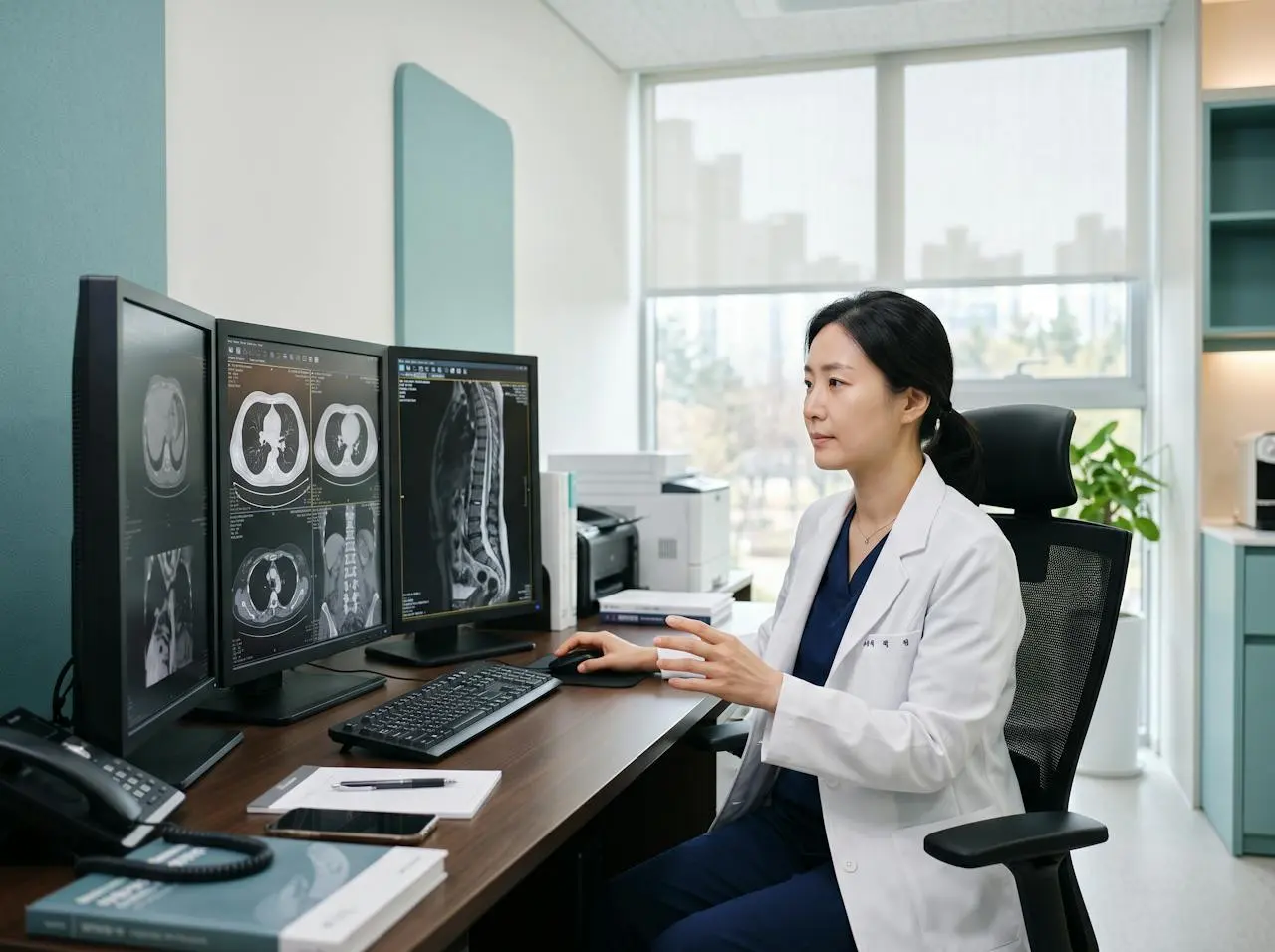
Carbon ion therapy is not applicable to all cancers. Eligibility is determined individually by the physicians of the medical institution based on the following factors.
- Cancer type
- Stage and presence of metastasis
- Location and size of the lesion
- Treatment history, such as prior radiotherapy
- General condition and coexisting diseases
- Each institution’s treatment criteria
The scope and criteria of public health insurance in Japan are set by the Japanese system and may change. Always check the medical institution’s official information on costs, eligible diseases, and availability.
04 · GENERAL PROCESS
General Understanding of the Treatment Process
The following summarizes the general flow described in public materials and is not a treatment plan for any individual patient. Actual procedures and timelines vary by institution and disease.
- 1
Document review
The medical institution reviews medical records to determine eligibility.
- 2
Treatment planning
After imaging such as CT and making an immobilization device, physicians plan the irradiation range and dose.
- 3
Irradiation
Irradiation is given the planned number of times. The number and duration vary by disease.
- 4
Follow-up
After treatment, progress is monitored on the medical institution’s schedule.
05 · REFERENCES
Materials and References
This page was prepared with reference to the official institutional materials and academic literature below. Last reviewed: 2026-10-10
- View original ↗QST Hospital: carbon ion therapy informationNational Institutes for Quantum Science and Technology (QST)
- View original ↗Carbon ion radiotherapy in Japan: an assessment of 20 years of clinical experienceKamada T, et al. Lancet Oncology, 2015;16(2):e93–e100
- View original ↗Particle therapy facilities in clinical operationParticle Therapy Co-Operative Group (PTCOG)
- View original ↗粒子線治療 (particle therapy information)Japanese Society for Radiation Oncology (JASTRO)
Do you have questions about these materials?
We accept general information inquiries only and do not provide medical consultation such as judging diagnosis or treatment eligibility.
Only with the written consent of the patient (or legal representative), we translate medical documents provided by the patient, deliver them to the Japanese medical institution the patient designates, and translate the institution’s reply.
Whether and how to treat is decided by the medical institution. We do not refer, broker, or book appointments with medical institutions.